A freelance quote is a written offer for a defined scope, a price, and a clear way for the client to accept it. The number is decided first. This article covers what the document needs to say so a direct client can say yes, ask a useful question, or walk away without confusion.
How to set the fee already lives in the rates guide, including a hypothetical client-ready quote used there as a pricing example, not as a quote document. This post is the offer itself.
Start from the discovery notes, not from a round number
Write the quote from what was actually agreed in the discovery conversation or the written brief: the outcome, the deadline, who approves the work, and what the client will supply. If those notes are still thin, do not invent a tidy total and hope the scope will catch up later.
When the specification is still incomplete, a paid first slice is often cleaner than a guessed all-in fee. The guide to website project pricing already mentions a paid discovery milestone when a website brief is thin. The same idea applies in other trades: price the investigation, then price the build. The rate calculator tool can be used to check a floor before the figure goes on the quote. It does not replace a written scope.
What every freelance quote should include
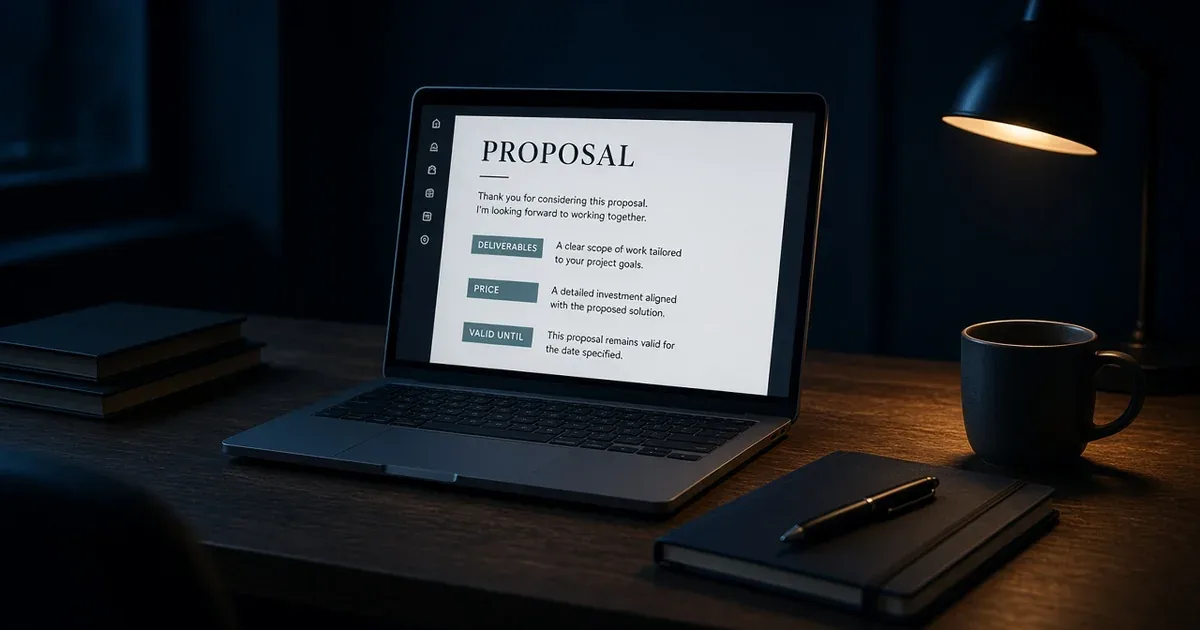
A usable quote is specific enough that both sides can tell, later, whether the work stayed inside it. Include:
The parties and the date of the quote.
The deliverables, described as finished outputs, not as a vague area of work.
What is not included. This is as important as the list of what is included.
The timeline, and what the client must supply for that timeline to hold.
The price, as one total or as line items that add up to a total.
How many revision rounds, if any, are included, and what happens after that.
Payment terms at a high level: when money is due, and how it will be paid. The full clause list belongs in the written agreement, not in a second copy of a contract checklist here.
A valid-until date.
How the client accepts: a signature, a written "yes" that refers to this quote, or another method both sides can keep.
State one currency, and keep the figures in that currency throughout the quote.
There is no official default for how long a quote stays valid. State a date the freelancer can still honour if the client replies on the last day.
Fixed price, a range, or a first slice
When the work is clear, one price is usually easier for a client to accept than a loose range. When part of the work is still uncertain, say which part moves the number, or quote a first paid slice that will produce a tighter second quote.
Do not present a deposit percentage, a buffer, or a late fee as a standard. Those figures vary by agreement, and competitor pages that quote "typical" percentages are not a source for this post. If a deposit is used, state the actual amount and when it is due, as part of this specific offer.
A fixed-price quote can show line items without hourly maths. Show an hourly rate only when the work will actually be billed that way.
Wording to adapt
The short email and document shape below are illustrative. Replace the bracketed text with the real scope and figures. Do not copy them as if they were a required template.
Email:
"Please find a quote for [project], dated [date]. It covers [deliverables], excludes [items], and is valid until [date]. The fee is [amount], with [payment terms]. If this matches what you need, reply to this email accepting the quote, or tell me what you would like to change."
Document shape:
Quote for [client], [date], valid until [date]
Deliverables: [list]
Not included: [list]
Timeline and client inputs: [dates and responsibilities]
Revisions included: [number or description]
Price: [total, or line items plus total]
Payment: [terms]
Acceptance: [how to accept]
After the client replies
A yes should be in writing and should refer to the quote that was sent. A question is useful; answer it and, if the scope changes, send an updated quote rather than patching the old one in a chat. A request to cut the scope is a new offer, not an automatic discount on the same list of deliverables.
If there is silence, one follow-up before the valid-until date is enough. Do not start work on a verbal yes alone. The work starts when the offer has been accepted in the way the quote described.
If the quote needs a change after it was sent, replace it with a new version and a new date, and say which earlier quote it supersedes. Do not leave two competing totals in the same email thread without a clear current offer.
If the work is on a platform
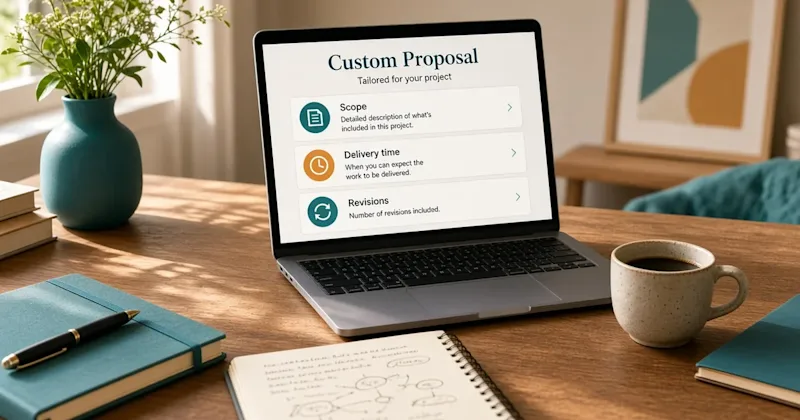
The contents of a good offer are similar on a platform: scope, price, timeline, and what is included. The offer itself should be made on the platform. An Upwork proposal pitch is a platform pitch, not this quote document. On Fiverr, a custom offer is the official tool for a tailored request. Keep the official offer where the order or contract will live.
A quote the client can accept is specific, dated, and easy to say yes to. The number comes from the rate work already done. This document is where that number meets a scope both sides can keep.