Asking to see a freelancer's work is normal. Asking for new unpaid work, done to the prospect's brief, is a different request. The reply depends on which one it is. This article is about that reply. It is not a guide to building a portfolio, and it does not set an industry-standard unpaid-test policy. It also does not promise that sharing a sample will necessarily lead to a paid job.
Existing samples versus new unpaid work
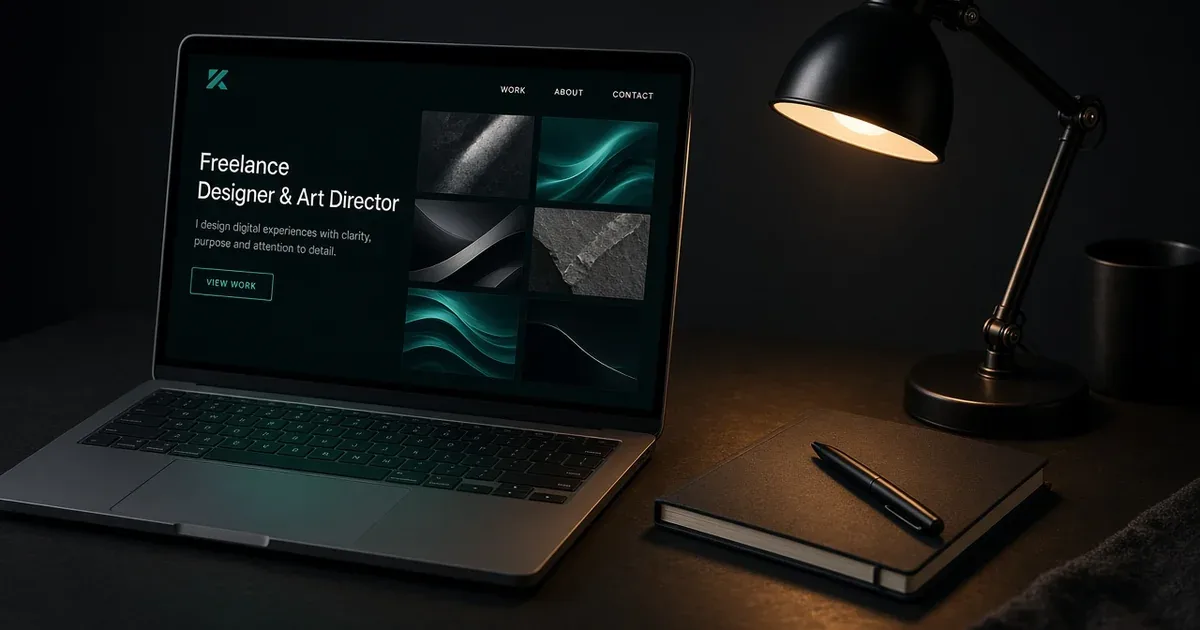
If the client wants to see how the freelancer works, share something that already exists: a relevant case study, a labelled practice piece, or a sample the freelancer is already allowed to show. That answers the question without creating unpaid work to a new brief.
If the client wants a new piece written, designed, or built to their instructions, that is work. It can be quoted, declined, or offered as a small paid trial. It should not be the default "sample."
The distinction is practical. An existing sample shows past work. A test done to their brief produces a new asset for them, often one they could use even if they never hire the freelancer.
A client who only wants to confirm style or quality can usually be answered with one or two existing pieces that are close to the requested work. Choose samples in the same medium and, where possible, the same kind of brief. A long folder of unrelated files is harder to assess than a short, relevant set with a line about what each piece was for.
If none of the existing work is a close match, say so, and offer a paid trial instead of inventing a custom unpaid test to fill the gap.
When a paid trial is a fair alternative
A paid trial is a short, defined first slice: a price, a delivery date, and a clear end. It should be small enough to test the working relationship, and complete enough that the client receives something usable. There is no typical trial fee in this article. Price the slice the same way any other small job would be priced.
A paid trial is not a discount on the full project in disguise, and it is not an open-ended test. When the slice is done, the next step is a quote for the remaining work, or a polite stop. Write the trial down the same way as any other small quote: what will be delivered, what will not, the date, and the fee.
Wording to adapt
The examples below are illustrative. Keep the facts true, and do not promise work the freelancer will not do.
Sharing an existing sample:
"Thank you for asking to see work. Here is a relevant sample: [link or attachment]. It is an existing piece, not a custom test. If the project is a fit, I can send a short quote."
Offering a paid trial:
"I do not do unpaid work to a new brief, but I can offer a paid trial: [specific output], delivered by [date], for [amount]. After that, I can quote the rest of the project."
Declining unpaid spec work:
"Thank you for the enquiry. I am not able to complete a custom unpaid test. I can share an existing sample, or I can quote a small first slice if you would like work done to your brief."
A short platform-thread version:
"I can share an existing sample from my profile. I do not do unpaid custom tests; I can send a quote for a small first task if needed."
When the request is a red flag
A genuine prospect can usually work with existing proof, or with a small paid trial. Some requests are not a normal portfolio check. Treat them with care, and often as a reason to stop, when the prospect wants a large unpaid test, work that looks like it will be used as-is, samples that resemble AI training material, or test work from several freelancers at once with no defined end. Pressure, urgency, and a refusal to look at existing samples are also warning signs.
This article does not retell a full scam checklist. If the request looks unsafe, decline and stop. Courtesy does not require a custom unpaid piece.
Students and beginners with few client samples
A short client list does not mean there is nothing to show. Labelled practice work, coursework samples the freelancer has the right to share, and a clearly marked personal project can all serve as existing samples. How to write those up as a case study already lives in the case-study guide. Building first samples from coursework is covered in the guide to labelled practice samples.
On Fiverr, point the buyer to the Gig portfolio samples rather than sending unpaid extras off the platform. For editorial work, a short editing sample that already exists can be the proof, instead of a new unpaid edit of the client's file.
Do not invent testimonials, client logos, or results. A clearly labelled practice piece is more useful than a fabricated case history.
If the client says every other freelancer will work unpaid, that is not a reason to start unpaid work. Offer an existing sample or a paid trial, or decline. Comparison shopping for unpaid labour is not the same as checking quality. The sample the freelancer already has is the honest answer. New work still deserves a quote.