Accounting for freelancers is the record of money that already moved. An invoice went out. A client paid. A software fee left the account. Finance for freelancers is the choice about what happens next: the rate, the buffer, and whether a project is worth taking.
The two words get used as if they were one job. They are not. Mixing them up leads to a folder full of receipts and no idea what to charge, or a rate picked from a forum and no record of what was earned.
This is a beginner map, not tax advice. Tax rules, registrations, and what counts as a deductible expense depend on the country and the legal setup. A qualified adviser is the source for those rules.
Accounting vs finance
Accounting vs finance is a difference of direction. Accounting looks backward. It answers what was billed, what was collected, and what was spent. Finance looks forward. It answers what the next month needs, what a job must earn to be worth the hours, and what should stay in the account after fees.
A freelancer can do the basic record alone. The forward decisions can also start simple. Neither task requires a finance degree on the first invoice. Both get harder when months of mixed personal and business spending have to be untangled at once.
Accounting basics for freelancers
Accounting basics for freelancers fit on a short list.
Separate the money. A dedicated account, or a dedicated record if a second account is not practical yet, keeps client payments from disappearing into daily spending.
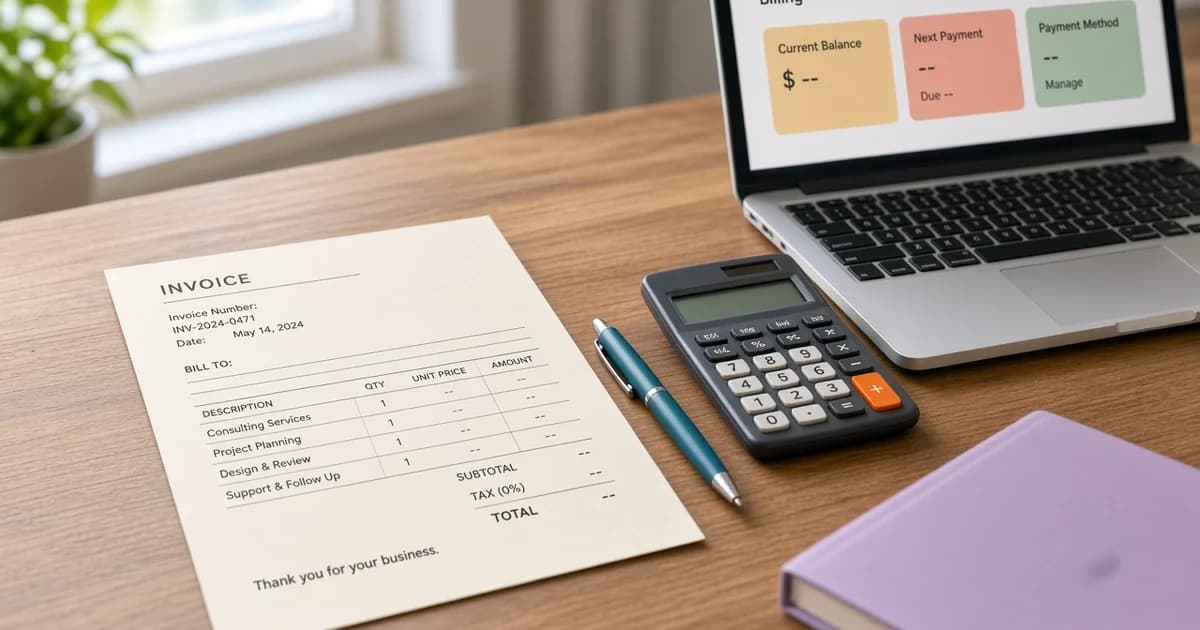
Send invoices that say what was delivered, the amount, and the date. Match the invoice to the payment when it arrives. Unpaid invoices are not the same as cash.
Record expenses when they happen. Software, platform fees, equipment used for the work, and payments to other freelancers. Keep the receipt. A note with the date and the purpose is enough when the receipt is thin.
Platform fees are an expense, not a surprise at the end of the year. Upwork fees and what freelancers keep shows how a fee changes the amount left on a job. The same habit applies on any site that takes a cut: write down the gross and the net.
Review the record once a month. Income collected, expenses, and invoices still open. A monthly check is dull. It is also what makes a tax conversation shorter later.
Finance decisions that use that record
Finance starts from the record. If last month's expenses and a target pay are known, a rate is less of a guess. The rate still has to fit the market and the hours a job takes. A number copied from a stranger's post is not a plan.
Cash timing matters. A client who pays in 30 days does not fund this week's bills. A small buffer, built from money already collected, covers the gap. The size of the buffer depends on rent, tools, and how long invoices usually sit. There is no universal number of months.
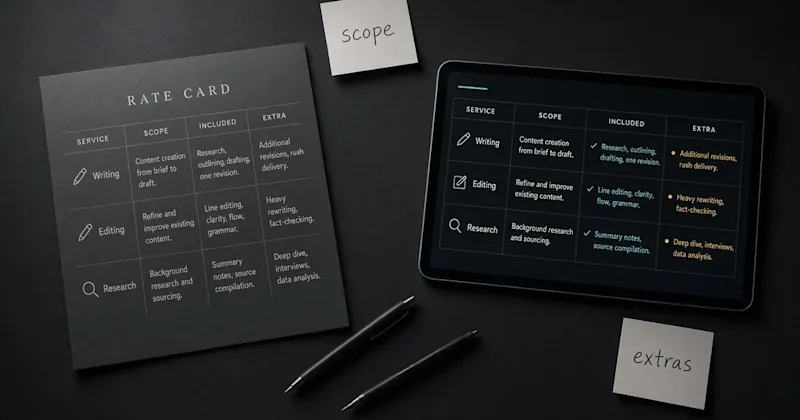
A job is easier to accept or decline when the hours and the costs are written down. A low price that ignores fees and revisions is a finance decision, not only a sales decision. How much to charge for a website is one worked example of turning scope into a price. The same questions apply to other services: what is included, how many rounds, and what the fee leaves behind.
A month of freelance bookkeeping
Freelance bookkeeping at this stage is a monthly pass, not a second business. Block an hour. Export payments from the platform and the bank. Mark each one as income, a platform fee, a tool, or personal spending that should not sit in the business record.
Open invoices get a status: sent, paid, or late. A late invoice gets one reminder that restates the amount and the original date. The reminder is a record too.
Then write three figures: cash collected, expenses, and still unpaid. Those figures are the handoff from accounting to finance. The next rate, the next yes, and the next no use them. A spreadsheet with those three lines is enough until the volume needs software. The categories should stay stable from month to month so a later accountant can read them. If a payment is unclear, leave it unmarked and resolve it in the same week rather than guessing a category that will be wrong at tax time.
When to bring in an accountant
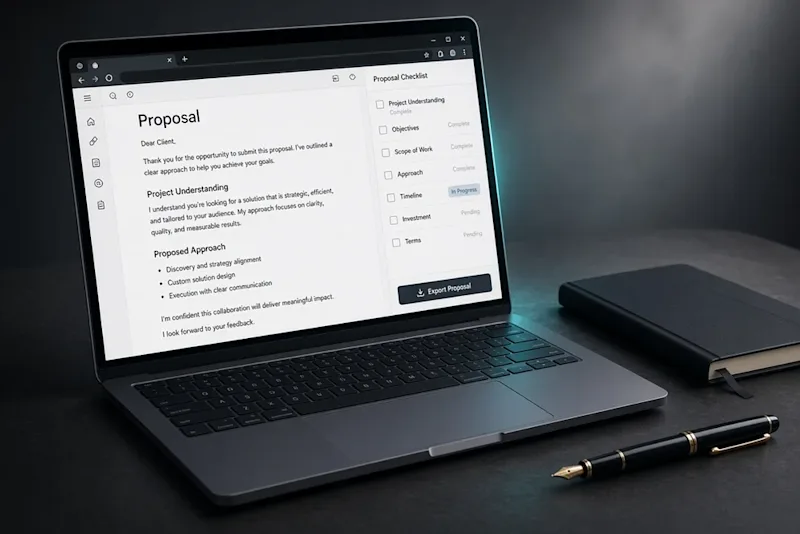
Bring in an accountant when the structure changes, when a tax form is unclear, or when the records are already messy. Come with the monthly list, the invoices, and the questions. An accountant cannot reconstruct a year from memory.
A simple folder is the system until software is worth it. One place for invoices sent, one for receipts, and one for the monthly three figures. Name each file with the date and the client so a search does not depend on memory. When a platform pays several jobs in one transfer, split that line so each job still shows its own amount and its own fee.
Software can hold the categories. The freelancer still decides what each payment was for. A tool does not replace that label.
Keep accounting as the record and finance as the decision. Update the record through the month. Use it when setting the next price or turning down a job that does not cover the work. A price that ignores the recorded expenses is a guess. A price that uses them is a plan the freelancer can explain.