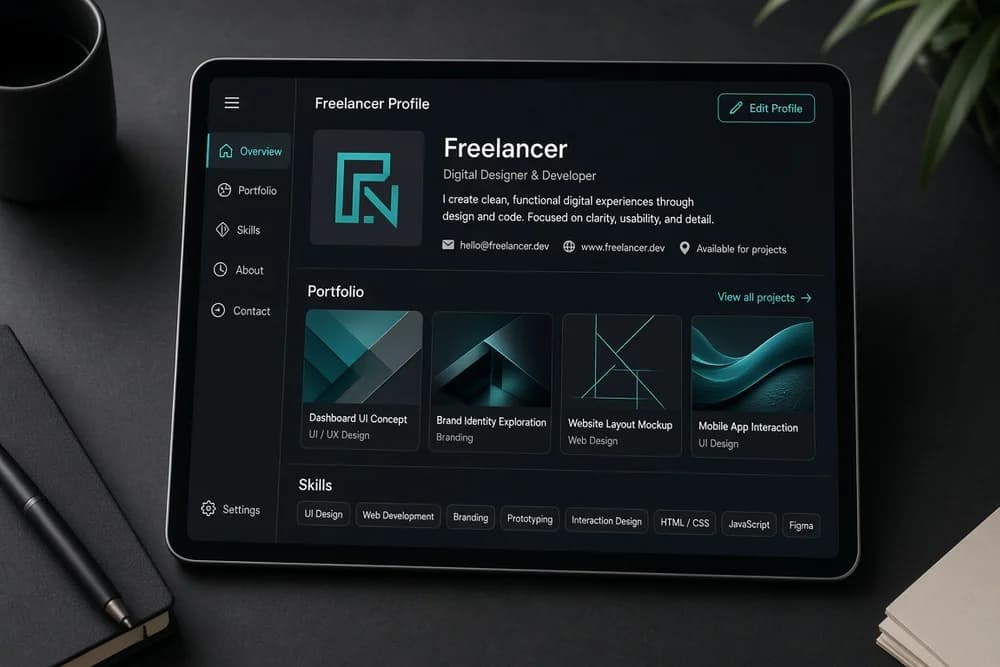
An Upwork profile that gets noticed is easy to understand in under a minute. A client should see what you do, who it is for, and proof you can deliver. If those three things are fuzzy, no amount of keyword stuffing will save you.
This guide walks through the profile pieces that matter in hiring decisions. It is for freelancers who already know their offer. If you are still deciding between five unrelated skills, pick one primary offer before you polish bio copy. For the full beginner setup path around the profile, see How to Use Upwork as a Beginner: A Step-by-Step Guide. If you need marketplace context first, read What is Upwork and How Does It Work.
Start with positioning, not with filling every field
Before you type, answer:
What outcome do you sell?
Who buys it?
What proof can you show this week?
Everything on the profile should support that positioning. Extra skills, unrelated history, and buzzwords dilute attention.
Photo and first impression
Use a clear headshot:
Face visible, good lighting
Plain or simple background
No group crop, no heavy filters, no logo collage as a “photo”
Clients are deciding whether you look real and professional. Treat the photo like a lightweight trust check, not a branding experiment.
Write a title that names the work
Weak titles sound like personality slogans. Strong titles name the service.
Examples of direction (adapt to your craft):
WordPress Developer for Small Business Sites
B2B SaaS Blog Writer | Case Studies and SEO Drafts
Product Designer for Mobile App MVP Screens
Avoid:
“Guru,” “ninja,” “passionate freelancer”
Ten services separated by pipes until nothing stands out
Titles that only say “Student” or “Beginner” with no skill
Your title appears in search and proposal lists. Make it specific enough that the right client feels recognized.
Overview: lead with the offer, not your biography
Most clients skim. Put the useful information first.
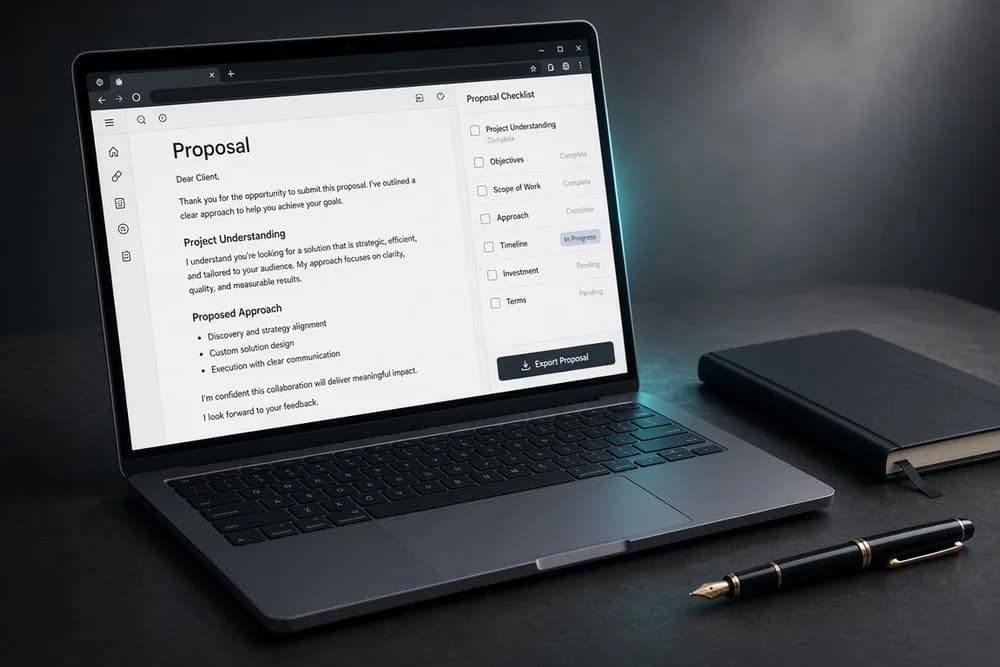
A practical overview structure:
Who you help + what you deliver (2 to 3 sentences)
How you work (process, communication, timelines)
Proof points (types of projects, tools only if relevant)
Call to action (invite them to share the brief or book a short chat)
Writing tips that keep it human:
Short paragraphs
Concrete nouns (“landing page,” “weekly content batch”) over abstractions (“solutions,” “synergy”)
No fake statistics
No walls of buzzwords
Skip openings like “I am a highly motivated professional with a proven track record.” Say what you build or write instead.
Portfolio: the section that does the heavy lifting
Portfolio quality beats portfolio quantity.
Aim for 3 to 6 strong pieces:
Show the final work when possible (images, links, documents)
Add a short caption: problem, what you did, outcome
Match portfolio items to the jobs you plan to apply for
Label practice or personal projects honestly if they are not client work
One relevant case study outperforms ten random screenshots with no context.
If you are new, create samples on purpose this week. Waiting for a perfect client project keeps the profile empty.
Skills, categories, and search fit
Add skills you can actually discuss on a call. Clients and Upwork search both use these signals.
Guidelines:
Prefer the skills named in jobs you want
Remove skills you cannot deliver
Keep specializations tight around your main offer
Update skills when your offer changes, not every time you try a tutorial
A bloated skill list makes you look unfocused.
Rates and availability
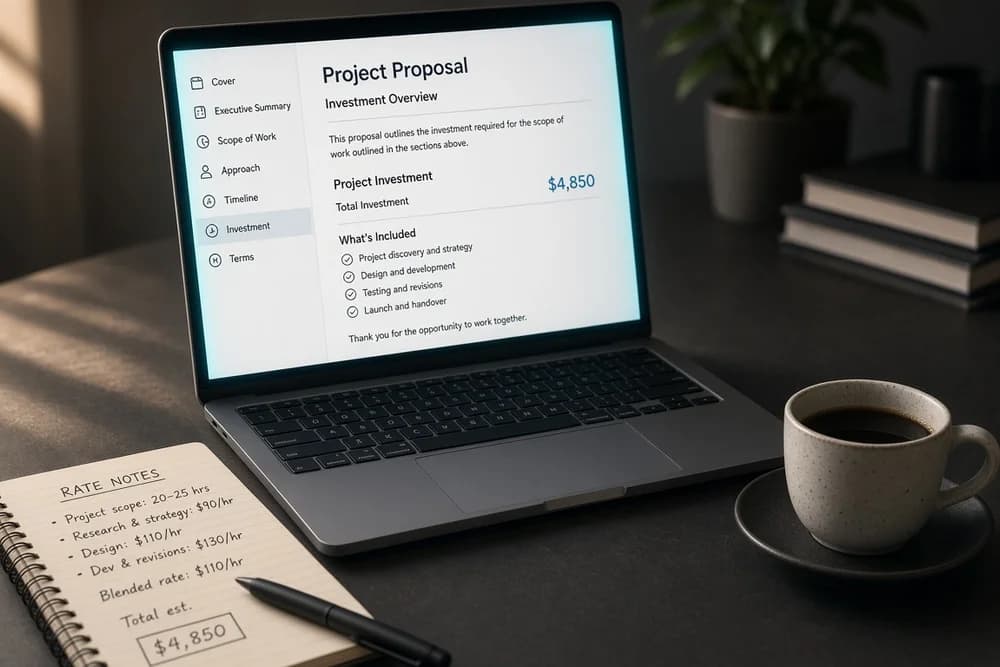
Set an hourly rate that matches the work you want. You can still propose fixed-price packages on individual jobs.
Things to consider:
Your minimum viable rate after platform fees
How long real delivery takes
Whether your samples support the rate
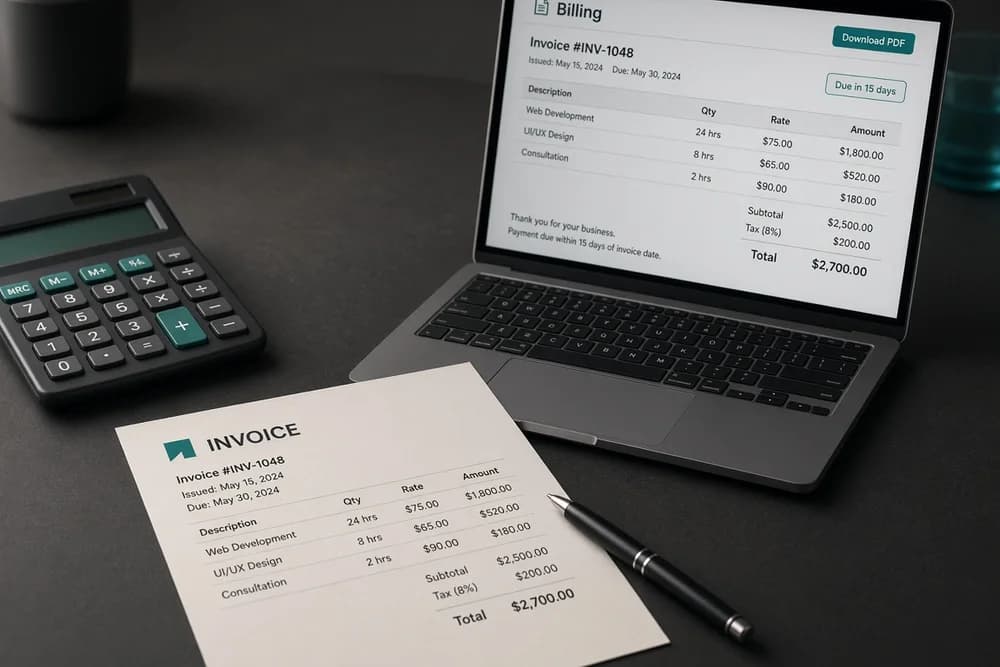
Gross up your rate so fees do not erase your floor. Use How Much Does Upwork Cost? Fees for Freelancers and Clients when you set numbers.
Availability should be honest. If you only freelance evenings, do not advertise full-time response speed you cannot keep. Slow replies after a strong proposal kill momentum.
Employment, education, and other history
Use these sections to support credibility, not to pad empty space.
Include:
Relevant roles or freelance work
Education that matters for the offer
Certifications only if they help a client trust delivery
Leave out unrelated filler that makes the profile longer without making the offer clearer.
Optional extras that help (after the basics)
Once title, overview, and portfolio are solid, consider:
A short intro video with clear audio and a simple script
Project catalog or fixed offerings if your work packages cleanly
Language settings that match how you communicate with clients
Do not stall publishing while you film the perfect video. Ship the core profile first.
Profile checklist before you send proposals
Title names a clear service
Photo looks professional and current
Overview explains offer in the first screen
3+ portfolio pieces with captions
Skills match your applications
Rate and availability are set
Payout and identity basics are complete on the account
If any of the first four fail, fix those before buying more Connects.
Common profile mistakes that keep you invisible
Generic title and overview recycled from a template
Portfolio missing or unrelated to proposals
Claiming expertise you cannot demonstrate
Keyword stuffing that reads like spam
Ten niches in one profile
Leaving the profile half-finished for weeks while “researching”
Getting noticed is less about tricks and more about making the right client’s decision easy. A strong profile still needs strong applications, so pair this with How to Write an Upwork Proposal That Wins Jobs and How to Get a Job on Upwork: A Beginner’s Guide.
Next step
Rewrite your title and the first five lines of your overview today so a stranger can explain your offer back to you. Upload or recaption three portfolio pieces that match the jobs you will apply for this week. A noticed profile is a clear profile with proof, refreshed whenever your offer gets sharper.