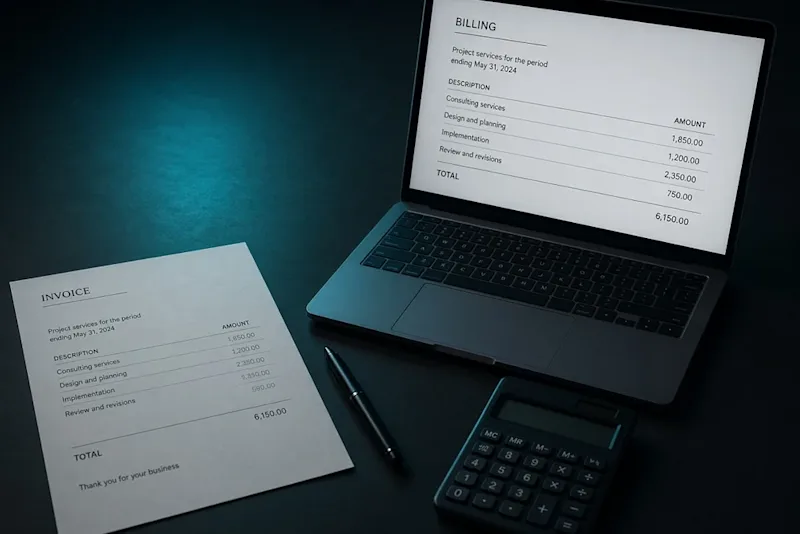
The number on an Upwork offer is not the number that reaches your bank. Upwork takes a freelancer service fee out of the contract before you withdraw. Clients can have their own charges on top.
If you set a rate or accept a milestone without taking out fees, you will charge too little. You will only see the problem when your payment seems low.
Look up the current fee in your Upwork account before you use any example below. The platform has changed the percent more than once. A blog cannot be your billing department.
What gets deducted from your side
On a freelancer contract, the service fee is a percent of the amount the client pays you for that contract. It applies to fixed-price milestones and to hourly billing. It is not a tip you can turn off by being new, and it is not waived because the client is difficult.
There may also be a cost to withdraw to your bank or to a service like Payoneer, depending on the method and the country. That second cost is smaller than the service fee on a real project, but it is still part of "what you keep." Check it once and write it next to the fee percent so you are not surprised by a $30 gap and a $3 gap at the same time.
Taxes are separate. Upwork does not calculate your income tax. If you owe tax in your country, the payout is not all spendable. That is your responsibility, not a hidden Upwork fee.
Three examples, with the fee stated out loud
Use these only as arithmetic. Replace 10 percent with the percent your account shows if it is different.
A $100 job at a 10 percent freelancer fee. The fee is $10. You are credited $90 before any withdrawal charge. A $100 "quick logo and homepage" is already a small site. After the fee it is smaller. If that page takes you a full day, you are working for $90 a day. Most web developers should not take that page.
A $500 job at 10 percent. The fee is $50. You keep $450 before withdrawal fees. This can be a sensible landing page if you can finish it in a few days and the scope is one page, their text, and one revision round. It is a bad price for a five-page site with custom sections. The fee is not what makes it bad. The scope is. The fee just removes the little cushion you thought you had.
A $1,000 job at 10 percent. The fee is $100. You keep $900 before withdrawal fees. That can fit a small business site if the pages are known, the text is supplied, and you are not also designing a brand. Quote $1,000 only if $900 is still a number you want for that many days. If you need $900 net and the fee is 10 percent, the client-facing price is about $1,000. If the fee on your account is higher, divide your target by what you keep from each dollar. A 20 percent fee means you keep $0.80 per dollar, so a $900 target is a $1,125 price, not a $1,000 one.
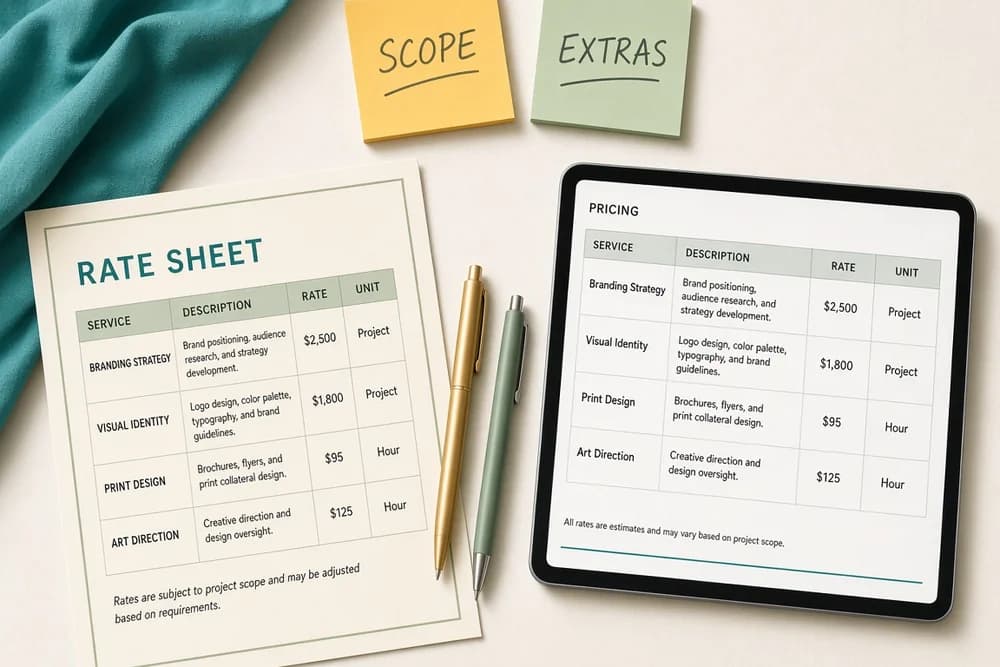
Do the same division for hourly. If you want $40 after a 10 percent fee, the profile rate is about $45, not $40. Publish the higher number.
Fixed price and hourly hide the fee in different places
On a fixed-price contract you see the pain at milestone approval. You billed $500, the release is $450, and the client thinks they paid $500. They did. The difference stayed with the platform. When you write the proposal, talk about the price they pay. When you plan your week, plan around the price you keep.
On hourly contract the fee is taken from the billed hours as well. A week at 10 hours and $40 is $400 to the client and $360 to you at 10 percent, before withdrawal. If you forget the tracker and those hours are not billed, the fee is the least of your problems. You may not be paid for them at all.
What not to do to "avoid the fee"
Do not move the client off Upwork to dodge the percent. It violates the rules, and you lose the contract record, the funded milestone, and any payment protection that depended on staying on the platform.
The fee is the cost of that machinery. If you do not want the machinery, find clients somewhere else from the start. Do not use Upwork as a dating service for off-platform invoices.
Do not add a fake expense to the milestone to claw the fee back unless it is a real cost the client agreed to, such as a paid font or a stock photo. Padding invoices is how disputes start.
Put the net number in your rate notes
Write three lines in a note you will reuse:
Fee percent from your account today
Withdrawal fee for your method
The lowest client-facing price you will accept for a landing page, and for a five-page site
When an offer comes in, run it through those lines before you accept. If the net is under your line, counter with a smaller scope or a higher price. Accepting and hoping to "make it up on the next milestone" usually means the next milestone is the same discount again.
The fee is predictable once you look it up. The expensive mistake is quoting from memory and calling the gap a surprise.