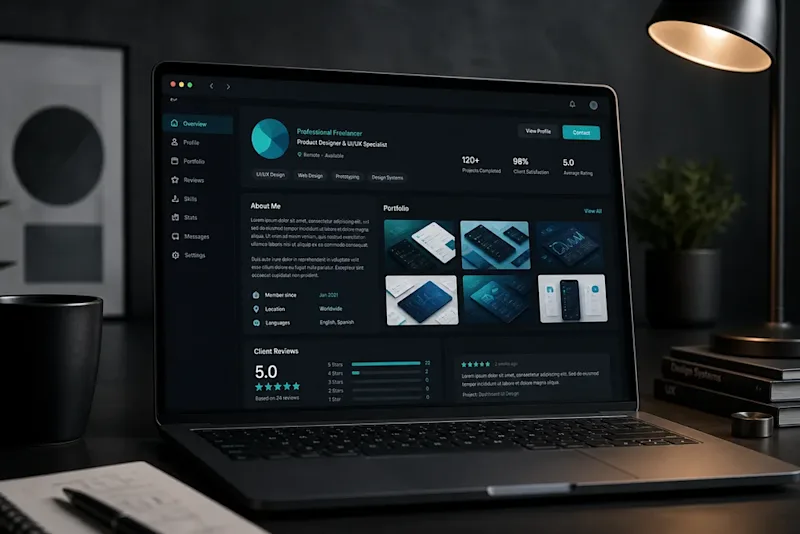
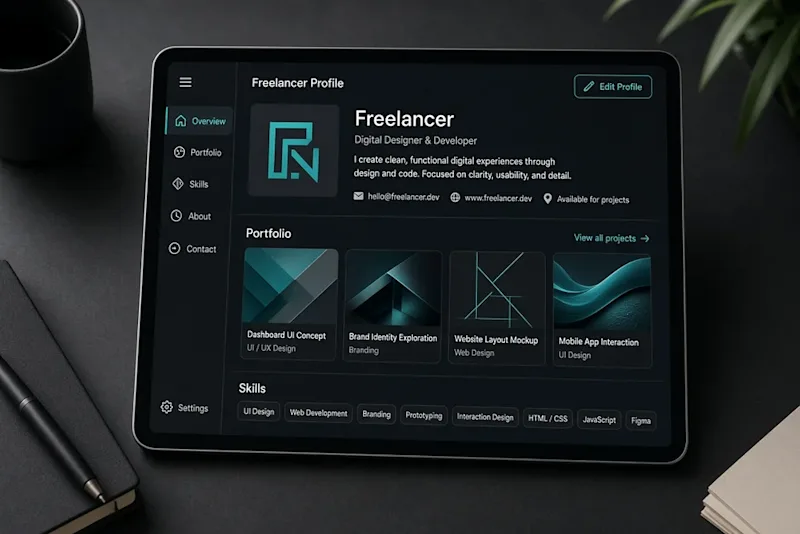
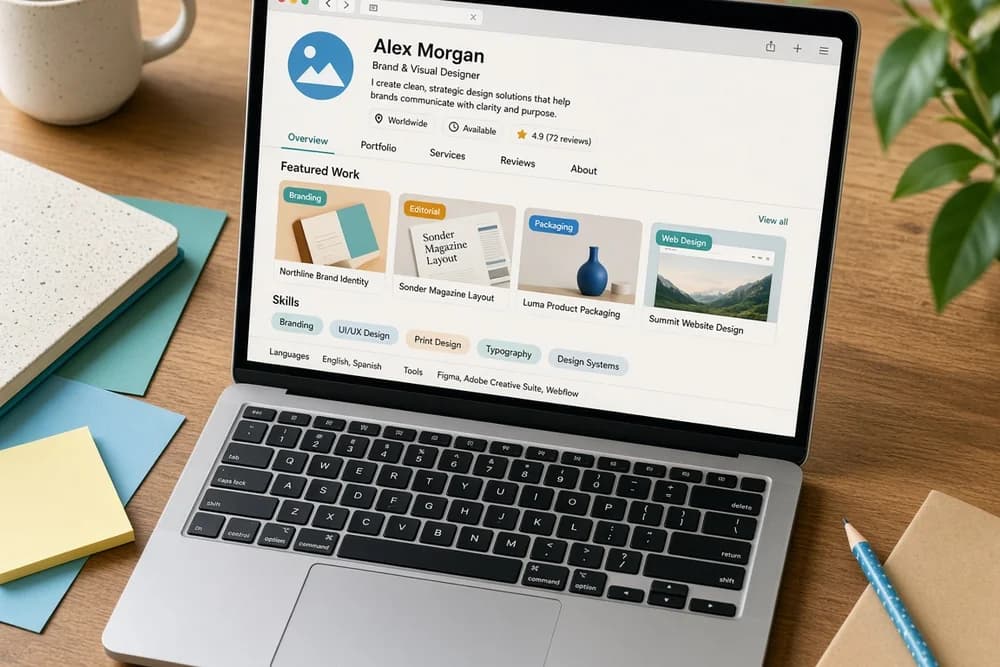
An Upwork profile is a storefront with one product on the shelf. Clients scan the title, the photo, the first lines of the overview, and whether a portfolio tile looks like their job. They do not read a career story. Build the profile so a stranger can tell, in under a minute, what you will build and what it costs.
This is for web developers opening or fixing a profile before they spend Connects. If you already have a booked calendar from referrals, you do not need a marketplace profile at all.
Write the title as an offer
The title is not a job application headline. "Full stack developer | React Node Mongo WordPress Shopify" tells a client you will accept anything. That sounds flexible. On Upwork it reads as unfocused, and the jobs that arrive will match the vagueness.
Use a title a client can repeat to a colleague: "Next.js marketing sites for small businesses" or "I fix slow WordPress shops." You can change the title later when you want a different kind of work. You cannot recover the Connects you spent bidding on everything.
Keep it short enough to read on a phone. Drop the word "passionate." Drop "expert" unless you can point at the portfolio and prove it.
Photo and the first two lines
Use a clear photo of your face, in ordinary light, looking at the camera. No logo, no vacation crop, no sunglasses. Clients hire a person for a paid contract. A blank avatar or a cartoon makes the profile look unfinished, and unfinished profiles lose to dull ones that at least look real.
The overview starts with the same offer as the title, then names who it is for. Two or three sentences. Then a short list of what a typical project includes and what it does not. Save the tools for a later line. A client with a brochure site does not care that you know three state libraries.
Write the way you would talk on a kickoff call. If a sentence could sit on any freelancer's profile, cut it. "I deliver high-quality solutions tailored to your needs" is that sentence.
Skills are a filter, not a trophy case
Add skills you will actually bid on this month. Every extra skill is an invitation for the wrong job. If you do not want hourly bug fixes on a ten-year-old codebase, do not lead with that stack.
Upwork lets you take skill tests and pin a handful of skills. Pin the ones in your title. Leave the rest off until you have a portfolio piece that uses them.
Portfolio: one strong tile beats six weak ones
Each portfolio item needs a thumbnail that shows the interface, a one-line description of the job, and what you were responsible for. "Built the marketing site" is enough if it is true. "Involved in various aspects of the project" is not.
If the work is under someone else's brand and you cannot show it, do not upload a stolen screenshot. Build a small public demo instead: a landing page with a real form, a readable blog layout, or a settings screen with empty states. Link it. A live URL is more convincing than a cropped Dribbble shot.
Three items that match the title are plenty. A seventh item about a student exercise from a different field makes the profile look like a scrapbook.
Set the rate after the fee
Your public rate is not your take-home rate. Upwork deducts a freelancer service fee before you withdraw. The exact percent is listed in your account and can change, so read it there instead of copying a number from an old post.
Do the math in the other direction. Decide what you need per hour or per small site after the fee, then set the profile number high enough that the fee does not eat the project. A low rate does not "get you in the door" in a useful way. It gets you clients who expect the low rate on the next job too.
If you are new, you can charge less than a specialist with years of client reviews. You should not charge less than the work costs you in time. A five-page site that takes you two weeks is not a $100 project, even on a new account.
What to leave blank on purpose
Skip the agency badge unless you are an agency. Skip a video intro until you can say the offer in thirty seconds without reading. Skip a list of every city you are willing to work with. Upwork clients are already hiring across countries. Location stuffing does not make the profile more global. It makes it longer.
Employment history can stay short. One or two roles, or a line that you have been building sites independently, is enough. The portfolio is the proof. The resume is the backup.
A profile you can bid from tomorrow
Read the profile as if you were a client with a $1,500 brochure site. Can you see the offer, a relevant sample, and a rate in one pass? If the answer is no, fix that before you open the job feed.
Then write one proposal that points at a specific portfolio tile. The profile does not close the client. It only earns the click. The proposal has to do the rest, and it should repeat the same offer, not a second personality.