"AI-powered" here means the offer uses AI in the work sold, or the freelancer sells a workflow that uses AI for the client. It is still freelance client work: a brief, a price, a delivery, and someone accountable. This post is how to package, sell, deliver, and maintain that work as a small business, including a no-code service path. It does not reteach the skill list, and it is not a product-startup or side-hustle guide.
Package one offer, not a catalogue
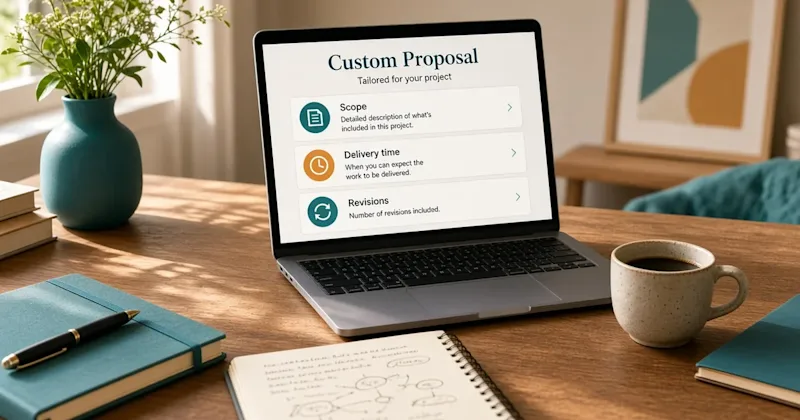
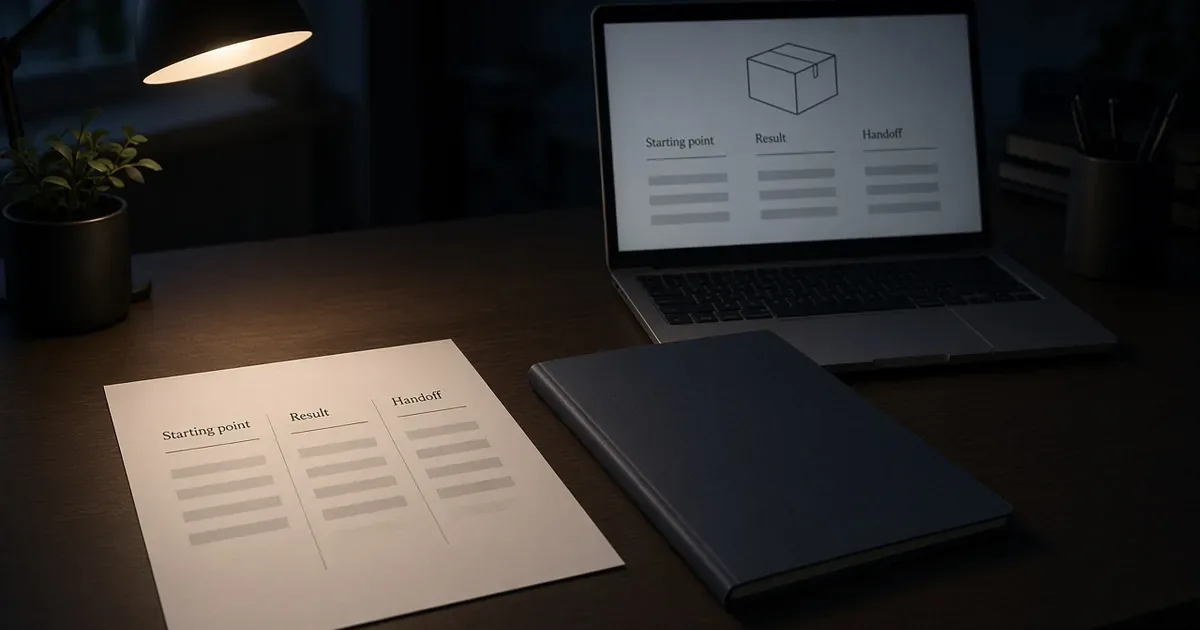
A usable offer names a starting point, a result, a time window, what is not included, and how requests outside that scope are handled. That can be one sentence plus a short list. It does not need a menu of every possible automation.
A catalogue of ten half-described services is harder to sell than one finished offer. The first business can be a single workflow, delivered the same way each time, with extras handled as a new request. That is easier to price, easier to hand off, and easier to explain in a short conversation.
Do not publish sample prices. Set the fee from the scope and a personal floor, then put the number in the quote. The pricing the first offer calculator can help with the floor. It is not a recommended retainer and not a typical automation fee.
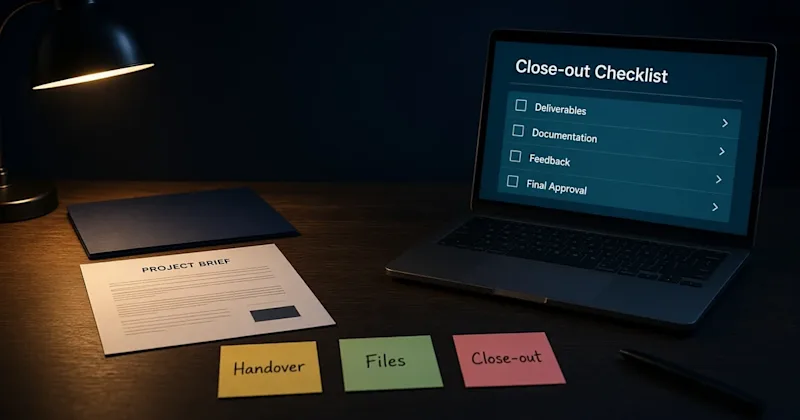
A finished one-off already has a close-out pattern in the guide to one-off freelance work. This article is about packaging the service so a client can buy a defined result, and later, if they want it, a defined way to keep it running.
The no-code path: selling freelance services without coding
Some client services can be built in no-code or low-code workflow tools: a lead follow-up, an internal draft that a person approves, an appointment reminder, a file that moves from one app to another with an AI step in the middle. Official sites for Zapier, Make, and n8n were opened on 13 November 2026. Make's FAQ, opened the same day, says a person can build without being a developer, and that a free plan exists with no card required. That is a starting option. It is not a claim that every system can be automated without code.
The client pays for a working service and a handoff, not for "access to AI." The freelancer is still accountable for how the workflow behaves. Out of scope for this post: app-store products, survey sites, faceless content channels, and any other generic online-income scheme. If the work cannot be described as a service for a named client job, it does not belong here.
No-code does not mean no-responsibility. If the freelancer cannot explain what the workflow will do with a messy input, it is not ready to sell. A developer can still be brought in for the parts that need custom code. Official docs for these tools describe that option; this article does not pretend every build stays on a canvas forever.
Delivery and access
Agree, in writing, who owns the account, the data, and the workspace before work starts. If the workflow lives in the freelancer's account, a later handoff is harder. If it lives in the client's account, access, billing, and permissions need to be clear from day one. This is practical habit, not legal advice.
Use dummy data until permission is clear. Include a human approval step when anything will reach the client's customers. A workflow that sends unreviewed messages is not a finished delivery, even if the connection "works."
Write down what happens when a step fails: who is notified, what stops automatically, and what the client should do. A short failure plan prevents the first emergency from becoming an undefined support contract.
Handoff and maintenance
A short written guide should travel with the build: what it does, where it lives, who can change it, and how to pause it. A screen recording helps, but written steps are easier to hand to the next person.
Ongoing maintenance is an option when the client wants it, not a mandatory retainer. There is no official default monthly fee, and this article will not invent one. If the relationship is a one-off, close it like other one-off freelance work. If it continues, define what "maintenance" includes (monitoring, small changes, a response window) and what starts a new paid request.
Finding the first clients
This section stays short on purpose. Finding early clients already covers general outreach. Proof in case studies already covers how to write up a finished job. This post will not become a second first-client guide.
A first conversation is easier when the offer is narrow and a demo can be shown on dummy data. Speak about the client's repeated task, not about "AI transformation." Ask what happens today, where it fails, and who has to approve a message before it goes out. Those answers become the package. Outreach that cannot name a starting point and a result is not a business yet; it is a tool looking for a job.
What this business is not
It is not a promise of passive income. A workflow still breaks, a plan still changes, and a client still needs a person who will answer. It is not a product company. It is not a way to "make money with AI" without a client. The work remains freelance service work: a brief, a price, a delivery, and someone who stands behind the result. If those four pieces are missing, it is not an AI-powered freelance business. It is only a set of tools.