When an invoice is past due, the useful order is to check the record, send a clear reminder, then escalate in writing if payment still does not arrive. Tone matters less than a dated trail: the invoice, the agreement, and each follow-up. The steps below are general information for direct-client invoices, not legal advice and not a debt-collection plan that will fit every country.
First, check the basics
Before a reminder goes out, confirm that the invoice was sent to the right person, that the due date has passed, and that the payment details on the invoice still match what was agreed. Check the written terms for the payment schedule, any late fee, and what happens if payment is late. If those terms were never written down, the next messages still need to restate the amount, the original due date, and how to pay.
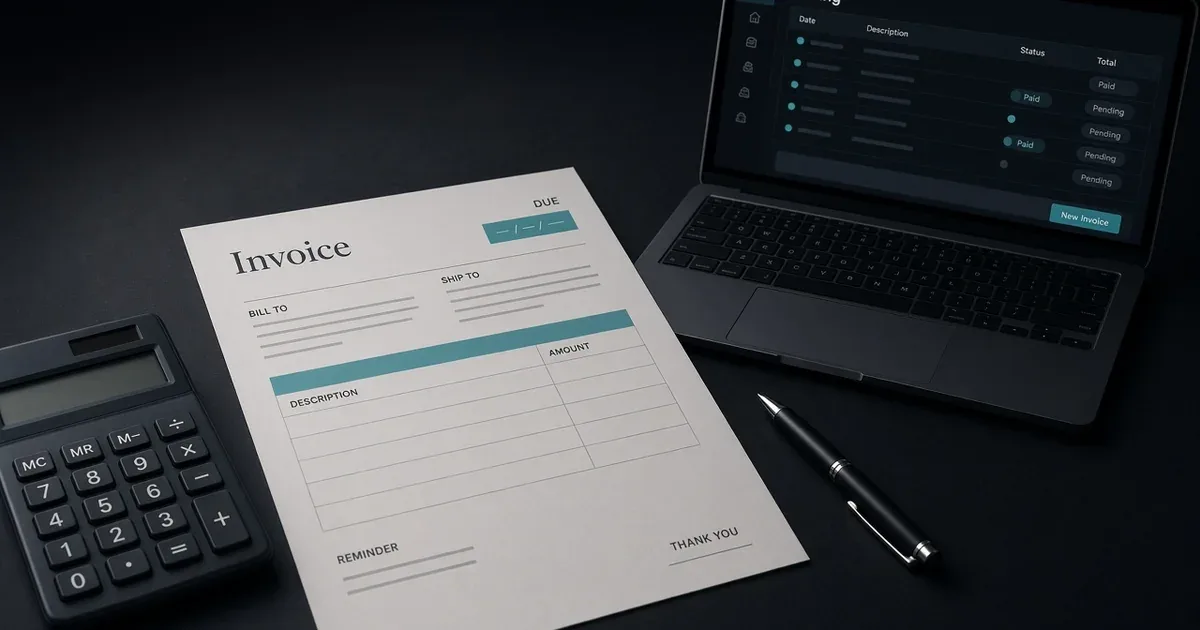
For a first pass at invoicing for direct clients, the invoice itself should show the client name, the work, the amount, the due date, and the payment method. Errors in any of those fields are worth fixing before the follow-up begins.
A reminder sequence
There is no official day count that every freelancer must follow. The dates below are illustrative only. What matters is that each message is dated, refers to the same invoice, and asks for a payment date.
A first reminder can be short: the invoice number, the amount, the original due date, and a request to confirm when payment will be sent. Attach the invoice again.
A second reminder can restate those facts, list the work the invoice covers, and ask the client to raise any dispute now, in writing, if the delay is about the deliverable rather than payment processing.
A later message can say that work will pause, if that is consistent with the agreement, until the invoice is paid or a written payment plan is agreed. Keep the wording factual. Illustrative lines include: "Invoice [number] for [amount] was due on [date] and remains unpaid. Please confirm a payment date." And: "Until payment is received or a written plan is agreed, further work on this project is on hold."
When to pause work, and how to say it
Pausing is more straightforward when the agreement already says that further work can stop if an invoice is overdue. If the agreement is silent, a pause is still a practical step on an unpaid project, but it should be announced in writing, with the invoice attached, and without a threat that the contract does not support. Do not withhold files that the agreement already required to be delivered unless a local adviser has reviewed that step. This article does not state a legal rule on withholding work.
A call before a formal letter
A short call can clear up a missing invoice, a changed billing contact, or a delay the client has not put in writing. After the call, send a message that records what was said: who confirmed receipt, what amount is agreed, and any new date. If the client cannot be reached, or the call does not produce a date, a written reminder remains the record.
Late fees
A late fee or interest charge belongs on an overdue invoice only if the agreement already allows it, and only in the form that agreement describes. Adding a new fee after the work is done, without a written term, is not treated here as a standard step. Local rules may also limit what can be charged.
As a UK example only, GOV.UK guidance on late commercial payments, opened 11 November 2026, says a business can claim interest and debt recovery costs if another business is late paying for goods or services. If a payment date is agreed, it must usually be within 30 days for public authorities or 60 days for business transactions, and a longer date must be fair to both businesses. If no date is agreed, payment is late 30 days after the customer gets the invoice, or 30 days after delivery, if that date is later. Those points apply to UK commercial debts. They are not a global rule. This article does not quote a statutory interest rate or a fixed recovery amount. Confirm current figures on the GOV.UK page, or on the official page for the country that applies.
Formal steps
If reminders have been ignored, a formal written demand can restate the amount, the original invoice date, the due date, and a deadline for payment, and can attach the invoice and the earlier messages. After that, processes differ by country. This article names no court limits, fees, or filing deadlines. A local adviser, or an official government page for that country, is the place to check what is available. Nothing in this article is a recommendation to start a claim.
Keep a record
Late invoice records are easier to use if they are built as the work happens, not after a dispute starts. Keep the signed terms or email agreement, the dated invoice, proof of when it was sent, delivery or acceptance notes, and each reminder, with dates. If the client later says the invoice was never received, resend it with proof of the original send date and ask for the correct billing contact.
Platform payments
When the work was done on a marketplace, payment and disputes follow that platform's official rules, not the reminder sequence above. For Upwork payout timing, Upwork withdrawal delays covers waits that are not the same as a direct client missing an invoice. Check the platform's Help for the current dispute process.
Reducing the risk next time
The next invoice is easier to collect when the fee, the due date, and any deposit or milestone are written down before work starts, and when the invoice itself is complete and dated. The Freelance Invoice Generator can produce a record with those fields. A deposit or a mid-project payment, where the client agrees to one, reduces the amount that is outstanding at any one time. This is general information, not legal advice.