An AI automation freelancer designs, builds, and looks after workflows that use AI and other apps so a client spends less time on a repeated task. This post is the skill path to a first sample.
Skills to learn
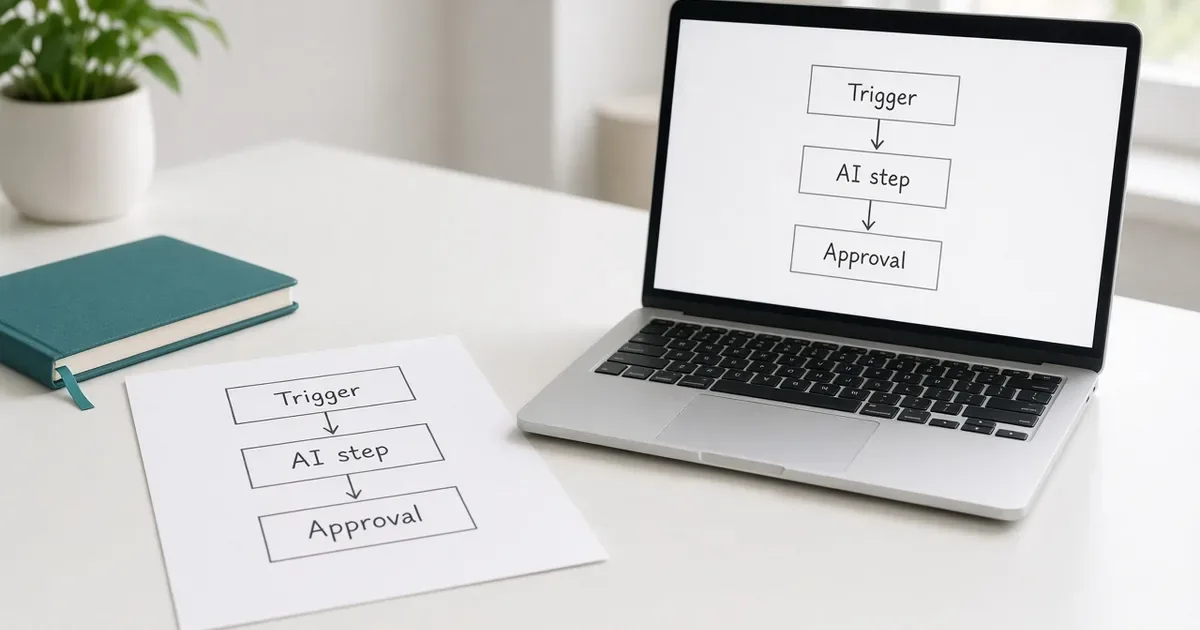
Start with process mapping. Write down what happens today, where the work waits, where it breaks, and what "done" looks like. A tool cannot fix a process that has not been described. The map should name the trigger, the input, the decision points, and the person who still has to approve the result.
Then learn one workflow platform properly, rather than collecting logos. Official sites for Zapier, Make, and n8n were opened on 13 November 2026. They are examples, not a ranked list, and this article does not publish plan prices. Make's official FAQ, opened the same day, says a person can build without being a developer, and that a free plan exists with no card required. That supports a first offer that does not start with code. It does not mean every client system can be automated that way. Some jobs will still need a developer.
Around that platform, learn how connections work at a conceptual level: a trigger, a webhook, an API. It is enough, at first, to know what each of those is for, and to recognise when a connection needs a specialist. Add an AI step only with a clear output and a human check. "Draft a reply and wait for approval" is a safer first service than "send every generated message to customers." Testing, logs, and a plan for when a step fails are part of the skill, not extras.
Client skills sit beside the technical ones: scoping the job, explaining limits, and refusing an open-ended "automate the company" request. A client may ask for a chatbot, a dashboard, and an email sequence in one conversation. The skill is to separate those into jobs that can be demoed and finished, then say which of them is in the first quote.
This is a skill list, not a ranked "best skills" or pay list.
Services you can sell
A clear offer names the starting point, the result, and what the client still does themselves. Examples include lead follow-up, appointment reminders, inbox triage with a human approval step, or document drafting that a person still reviews. Each one should be narrow enough to demo on dummy data.
"I build automations" is not an offer. "When a form is submitted, a draft follow-up is prepared, and a person approves it before it is sent" is an offer. Do not publish a price table. The same job can be a small fixed-scope project for one client and a poor fit for another.
Write the offer in the client's words. "Leads wait two days for a reply" is a better starting point than "AI outreach system." The more specific the pain, the easier it is to show a before-and-after in a sample, and the easier it is to know when the job is done.
Build a sample before you pitch
Two or three demos on dummy data, a short screen recording, and a simple diagram are enough to start a conversation. There is no official number. Do not use a client's real data in a public sample without permission.
The recording should show the trigger, the AI step, the approval, and what happens when an input is wrong. A viewer should be able to see the limit of the workflow, not only the happy path. How to write a first case study already covers turning a finished project into proof later. Samples with no clients can start as labelled practice work, the same way other first portfolios do.
Keep the demo data obviously fake. Invented names and placeholder emails make it clear that no real customer was used. If a later paid job uses live data, that permission should be written down before the first connection is made.
Pick a niche you already understand
Choose one industry or one process, so the offer is not "I build automations." A person who already understands a clinic's booking flow, a shop's order emails, or a team's reporting cycle can describe the starting point in the client's language. The method for picking a service niche already lives in that guide and is not repeated here.
A narrow offer is also easier to demo. One repeating task, one approval step, and one obvious failure case will teach more than a catalogue of half-finished scenarios.
First paid work
The first paid job should be a small, fixed-scope build, not an open-ended request to automate the company. Write down what is in scope, what is not, and how extra requests will be handled. Discovery and a written quote have their own later posts; this article will not invent those templates.
Safety belongs in the first job, not later. Do not connect live, customer-facing messages without an approval step. Agree who owns the accounts and the data before anything is connected. That is practical habit, not legal advice.
This post will not invent a rate. Set the number from the scope and a personal floor, then put it in a quote. The minimum freelance rate calculator is a starting point for that floor, not a promise and not a typical automation fee.
The work of becoming the person who can do the job stops here: one platform learned properly, a tight service, a sample that can be shown, and a first scope that can be finished and checked.