"No money" here means starting with time, one skill, and tools that are already free or already owned. It does not mean freelance work is free to run forever, and it does not mean income is guaranteed. The aim is a first offer, a sample, and a profile, without paying for ads, courses, or a new website on day one.
Spend nothing on the offer first
Pick one result that can already be produced, or that can be practised with a sample built on the freelancer's own time. A tight offer is cheaper than a vague one, because it does not require a paid course to "find a niche." This post is not a highest-paying skills list. The existing niches guide is the place for tightening what is on offer, and this article will not retell it.
The offer should name a starting point, a finished result, and what is not included. That can be written in a notes app. It does not need a paid website or a designed sales page before the first conversation. If the skill still needs practice, the practice happens on a self-set brief, not on a stranger's unpaid request.
A portfolio that costs no money
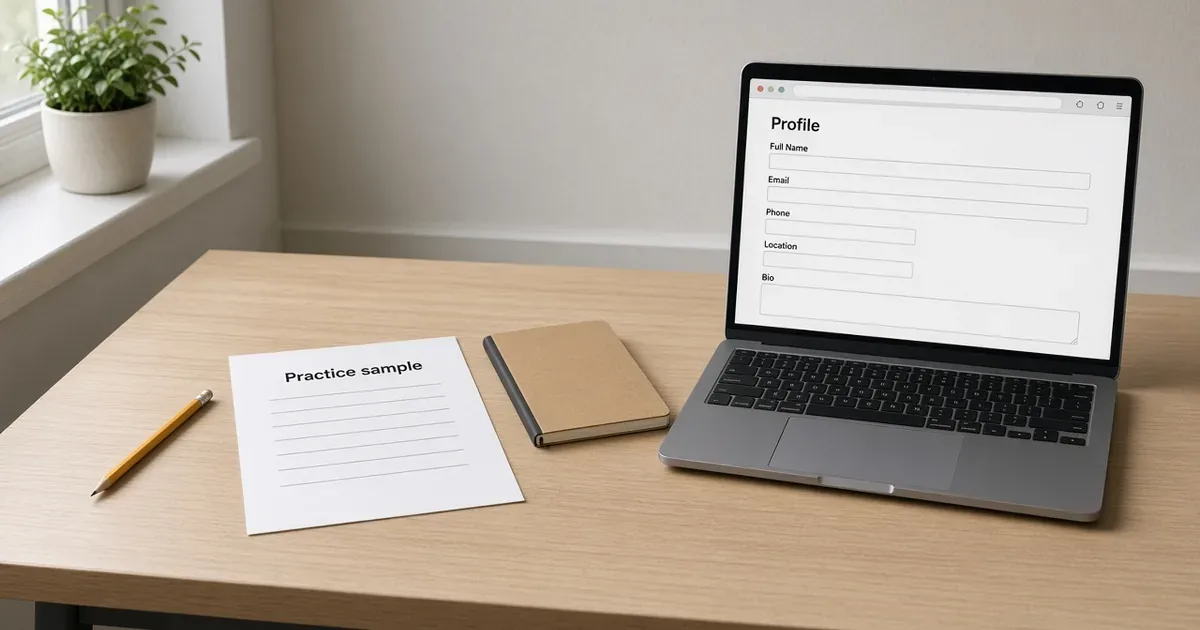
One or two samples are enough to start a conversation: coursework, a practice brief, or a clearly labelled personal project. Free file hosting or a simple public page is enough. There is no need to buy a portfolio platform before the first enquiry.
Label the sample honestly. A practice piece is a practice piece. A class assignment is a class assignment. Clients can usually tell when a case study is invented, and a clear label is cheaper than a rushed, unpaid job taken only to fill a page. Keep the files. The same sample can support a profile, a proposal, and a later case study without a new purchase.
How to start with no experience already covers coursework and labelled practice samples, including for readers who are students. That path is not copied here. A practice sample the freelancer built is different from unpaid work for a stranger. Unpaid client work should not be the default way to start.
Profiles and platforms without a paid plan
A Fiverr or Upwork profile can be opened without buying ads. That is not the same as "the platform stays free."
Fiverr Help, "Creating your Fiverr account," updated and checked on 13 November 2026, says every account starts as a client account, and a freelancer account is activated when the user chooses to offer services. Activation and Gig creation are desktop-only on that page. Users must be at least 18, or 13 to 17 only through a parent or guardian's account with permission. Freelancers are reviewed during sign-up and Gig creation and are subject to approval. The page does not say Fiverr has no later fees. For what a seller later keeps, use the live fees post rather than a guessed percentage.
On Upwork, official Help opened on 13 November 2026 is clearer about later costs. Connects "cost $0.15 USD each" (Help article "About Connects," updated 6 November 2026). Some new freelancers "must first make a qualifying Connects purchase or join Freelancer Plus before they can submit any marketplace proposal, including one in response to an invitation." Connects are not required to respond to some invitations or to work on an existing contract, and they expire one year after they were issued. Using them does not guarantee a view, a reply, or a hire. Routes that avoid a purchase, and the question of when Connects are worth the spend, already have their own guides, including free Upwork Connects.
The freelancer service fee is separate. Upwork Help, checked on 13 November 2026, says the fee "ranges from 0% to 15% per contract," is shown on the proposal or offer, and is locked in once that proposal, offer, or contract is sent. A withdrawal can also have a cost; Direct to Local Bank is listed at $0.99 USD plus any incoming bank fees (Help updated 30 October 2026, checked 13 November 2026). They are mentioned here only to show that "no budget to start" is not "no fees forever."
How to get a first Fiverr order already covers Gig setup and the first delivery. This article will not rewrite it.
First clients without paid ads
Paid ads are not required for a first approach. A tight Gig, a tailored proposal, and a clear sample are the unpaid starting points. Beginner client habits already cover that work in general terms. This post will not invent reply rates, and it will not become a second first-client list.
Time is the budget that gets spent instead. A short, specific proposal usually costs nothing but attention. A boosted listing or a paid course can wait until there is evidence that the offer is clear and that a real client has already asked for the work. If a platform later requires Connects or charges a service fee, that is a reason to read the official page and the existing Connects and fees guides, not a reason to buy an expensive first-client package from a third party.
What is worth buying later, not first
A paid course, a paid boost, or a paid website can wait until there is a reason: a repeating offer, a client who needs a permanent page, or a Connects purchase that has already been judged against a real job. There is no official "standard first purchase." Freelancer Plus is a paid Upwork membership with extra Connects and tools; official Help lists the benefits, and this article does not invent a subscription price. It is optional, not a requirement to exist on the platform.
Scams that target people with no budget
People who want a low-cost start are often sold upfront "training fees," fake job deposits, or paid "guaranteed first client" offers. Treat those as warning signs, not as shortcuts. A longer guide to spotting fake clients is planned as a separate post; until it is live, the rule is simple: do not pay a stranger for the privilege of doing work for them, and do not move a platform conversation off the platform because someone promised a bigger budget outside it.