


Online work is a common path for first-time job seekers and people changing careers, and the goal is the same for both: find reliable ways to earn from home without an upfront investment. The route that works is unglamorous. Find employers who hire remotely, verify them, narrow your focus to a niche, build a simple public presence, and follow a repeatable job-search process until one option fits.
Early internet marketing and remote work can be hard to land consistently. Treat this as steady outreach over weeks, not a one-click fix.
Find and vet work-from-home employers
Where to look
Start by contacting companies that offer remote roles. Plenty of listings are online, and they are a reasonable starting point as long as you treat each one as unconfirmed until you check it.
Job fairs and trade shows also work, especially if your skill is easier to show in person than to describe in an email. Employment services are worth using too: they can point you toward more trustworthy employers and, in some cases, support short-term contract hiring. Use them when you want a filter between you and raw online listings.
Verify before you invest time
If an employer cannot prove who they are, treat that as a red flag. Fraud is common in unverified work-from-home offers, so confirming the opportunity is real comes before any unpaid effort on your side.
A short check covers most of it:
A company identity you can look up independently, not just a profile or a chat account.
A named person with a role, reachable at the company's own domain.
A description of the work that stays the same each time it is explained.
Written scope and payment terms before you start.
If any of those are missing after you ask, stop spending time there and move to the next lead. That is not paranoia, it is triage.
Keep your outreach short
When you reach out, email a short note that explains your situation and the role you want. Long messages do not read as more serious, they just get skimmed.
One workable shape: who you are, the specific role or work you want, one line of evidence that you can do it, and a clear next step such as a short call. After you set a meeting, use it to confirm the opportunity is real before you invest more time.
Pick a niche you can actually enter
Finding regular online work is easier when you narrow your focus. If you are unsure where to start making money online, choose a niche that matches skills you already have or can learn quickly and that clients and employers already recognize as a thing they hire for.
Broad "I will do anything online" searches make early hiring harder, because nothing about you is memorable and nothing matches a specific opening. Narrower positioning makes your outreach clearer and makes new openings easier to spot when they appear.
Two questions to test a niche before you commit:
Can you name the work in the way an employer would advertise it?
Can you show something, even small, that proves you can do it?
If the answer to both is no, pick something adjacent that you can support today and grow from there.
Digital products: a slower, product-based path
The online space also supports digital products and services such as eBooks, videos, and apps. This is a real option, but it is product work rather than a job search, and the payoff depends on whether anyone wants what you build.
Research it carefully before you spend money or time on it. If you need income soon, treat products as something you add later, after paid work is coming in.
Build a simple online presence
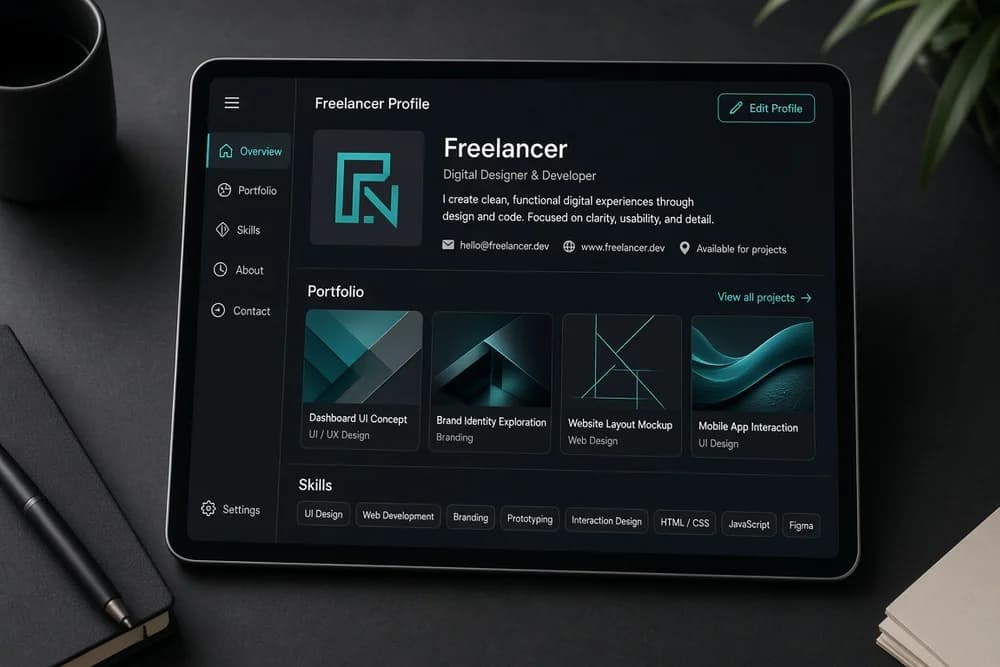
Alongside the search, host a clear public presence: a blog, an Instagram account you can monetize, or an email list. Pick one to start rather than launching three you cannot maintain.
The point is trust. People hire and buy more readily when they can see who you are and what you do, which means the presence should show your work and your niche, not just activity.
Steps to land and keep online work
Show up like a reliable employee or contractor, not a one-off applicant. That decision changes how you follow up, how you communicate, and whether anyone thinks of you again.
Do something useful for clients regularly, for example a small weekly follow-up or improvement. Regular usefulness is what makes repeat hiring likely.
Set a clear objective, then follow the plan in order: target employers, send outreach, verify the company, interview, then deliver. Skipping a step usually costs you later, and the step people skip most often is verification.
A weekly rhythm keeps this from stalling:
Add a set number of new employer targets.
Send outreach to each one and log what you sent.
Verify anyone who replies before booking anything longer than a call.
Publish or update one thing on your chosen channel.
Follow up on the previous week's conversations.
What to do next
Pick a niche people can recognize, then use outreach, careful vetting, and a simple public presence to earn from home. Perseverance matters more than hype here. Start with one channel, prove you can get paid work through it, and expand only after that part works.